How To Lose Belly Fat Home Remedies In Hindi

How To Lose Belly Fat Home Remedies In Hindi

Reviewed by Helen Kollias, PhD


Basics | Advice | Foods | Exercises | Psychology | Supplements | Pregnancy

Before we tell you how to lose belly fat, we'd like to say this:

There's nothing wrong with belly fat.

In fact, in many cultures, it's desirable to have some extra squish.

Certainly, at various points in history, luscious roundness was the look. (Google "Renoir's bathers" or "Rubens' nudes.")

And yet, in modern popular culture—despite some progress celebrating more diverse body shapes—we still overwhelmingly glorify the six-pack and the itty-hourglass waist.

(Not that there's anything wrong with those shapes either.)

Either way, many of our clients come to us wanting to lose belly fat.

Which is why we're covering the topic.

Fair warning: This story will be different than what you usually find on the web in a magazine. That's because we're going to give you practical, realistic, big-picture answers.

(And those answers might not be what you expect.)

Indulge in some navel-gazing, and explore this topic with us.

Why belly fat even matters

You might've noticed: Regardless of body fat, people are shaped differently.

And it turns out, where we store fat matters.

Visceral fat vs. subcutaneous fat

If you sliced someone's belly open (gross), you would find fat in two places.

This illustration shows the two types of fat that reside in the belly region. Subcutaneous fat is close to the surface, and is the kind you can pinch. Visceral fat is deeper, and surrounds your organs.

▶ The padding just under the surface of the skin: This type of fat, called either subcutaneous fat or peripheral fat, is relatively benign.1,2

▶ Deep in the abdomen, often surrounding vital organs like the liver, stomach, and intestines: Called visceral or central fat, this contributes to chronic inflammation, the formation of arterial plaque, and blood clots.3 It's also associated with an increased risk for metabolic disorders, including type 2 diabetes and cardiovascular disease.4,5

Generally, if someone has more subcutaneous fat, they'll also have more visceral fat—but not always. Occasionally, a person can appear quite lean, with little subcutaneous fat, but still have higher levels of visceral fat.

Okay, but why do I have belly fat?

Well, as you've probably heard, where we store fat relates to hormones, genetics, and certain medical conditions.

Things that can increase visceral fat include:

  • A higher body fat percentage: Although genetics and hormones will determine how fat is distributed, people with more body fat are more likely to have higher amounts of belly fat.
  • Being a man: Compared to premenopausal women, men are more likely to carry extra fat around their midsection. That's because their visceral fat stores seem to absorb a greater proportion of dietary fat.6
  • Being postmenopausal: Mostly due to hormonal shifts, women tend to experience a shift in body fat distribution post-menopause, with a decrease in leg fat, and an increase in abdominal fat.7
  • Aging: As fat cells age, they secrete more inflammatory factors and also get redistributed from subcutaneous stores to visceral depots.8
  • Having chronically high levels of cortisol: Visceral fat soaks up and breaks down excess cortisol.9
  • Having certain gene variants: Several genes have been linked to body fat distribution. (If you're into that kind of stuff, the genes are: TBX15, HOXC13, RSPO3, CPEB4, and LRP5.) While all people carry these genes, certain versions of these genes predispose a person to carry fat around their midsection, compared to their hips and legs.10,11

We can't do anything about our age, sex, or genes. (Sorry). But we do have control over a few other things.

And we're about to get into just that.

"Belly fat" after pregnancy: It might not be what you think it is

Immediately postpartum, women will lose about 13 pounds (bye baby, placenta, and other tissues).

After that, more weight loss may slowly occur as the uterus returns to its regular shape, and fluid levels normalize.12

Many women find, however, that their bodies, especially their bellies, look different—even if they return to their pre-pregnancy weight.

This is likely because their abdominal tissue stretched to accommodate their fetus. Now it's fluffier, and doesn't compress tissues and fat as well as it used to.

Lingering diastasis recti—a separation of the abdominal muscles—can also make the abdomen look more rounded.

(If diastasis is giving you problems, see a pelvic physiotherapist. They can assess the degree of diastasis, give you safe ways to move your body, potentially repair some of the abdominal separation, and improve symptoms.)

Though strengthening key core muscles (like the transverse abdominis) can help both issues, it takes time.

With so many other changes going on in your life (remember sleep?), this news can be tough to swallow.

At the same time: Your body just did a really amazing thing.

So while there's nothing wrong with wanting to work on your body after pregnancy, make sure you approach that work with love, compassion, and a heck of a big high five.

How to lose belly fat, in 6 steps

If there's a trick to incredible results, it's this: the ability to practice basic (sometimes boring) health behaviors over and over again.

Wait!

Come back!

Hear us out.

What we're about to share will probably trigger your inner "I know this already" voice. You might roll your eyes and think there's nothing new here. Nothing "cutting edge" or "sparkly."

But, if you use these steps, you'll see results.

Results you can actually sustain.

And hey, that would be pretty thrilling.

1. Know why you want to change your belly.

This will help you set clear goals and stay motivated.

Maybe you're thinking, "This is easy. I'm here because I want to lose belly fat! Step 1 is now complete!"

Easy there, partner. Let's get specific:

  • Has your doctor told you to lose weight for health reasons?
  • Are you pretty healthy, but feel like your pants are getting tighter, and you just wanna know what's up?
  • Are you looking to get totally shredded, with visible abs?

Whatever your reasons, you're welcome here.

However, if you've decided to slim down for your health, let's dig a little deeper because, beyond a certain point, getting a leaner midsection isn't healthier.

Yes, larger midsections—over 37 inches (94 cm) for men, and over 31 inches (80 cm) for women—are correlated with:13,14,15,16

  • Type 2 diabetes
  • Cardiovascular disease
  • Dementia
  • All-cause mortality

And yet, plenty of people fall well under these waistline parameters—and feel pretty fit and healthy too—but they're unhappy with their bellies.

(By the way, plenty of people fall above these parameters and are also healthy—and happy with their shape.)

While there's nothing wrong with wanting to change your body for aesthetic reasons, it's worth considering:

Sometimes when we go through tough stuff—a divorce, dealing with a sick parent, a job loss—we look for other ways to feel better and more fulfilled. Like, "getting ripped."

And getting a flat (or flatter) stomach won't fix those problems.

In fact, sometimes getting hyper-lean creates new problems and stress.

(Learn more about the tradeoffs: The cost of getting lean.)

Because of that, lots of clients have found value in learning to accept their softer sides, rather than fight them.

Some did that through learning to view their bodies through the eyes of a loved one—such as a toddler who cuddles up to "stomachy" because it's so squishy and comfy. Or, they've learned to appreciate their bodies for what they can do.

So, know your reasons for wanting to change.

And whether that change is worth the effort.

2. Accept (even if begrudgingly) that there's no trick to spot-reducing belly fat.

We all want the easy way out of stubborn problems.

Especially when life (laundry, sick relatives, rebellious teenagers, injuries, and what's that smell in the heating duct) feels challenging enough.

Plus, there's no shortage of books with titles like The Belly Shrinking Diet or magazines promoting "4 Exercises to Give You Abs in 4 Weeks" to make us think that spot-reducing is not only possible, but easy.

Argh.

But just like you can't lose fat only off your left tricep, you also can't lose it just from your belly.

Belly fat loss goes along with overall body fat loss, which usually goes along with changes to diet and exercise.

Why are we telling you this? Because the sooner you give up on what doesn't work, the sooner you can move on to what does.

Note: We're excluding surgical and pharmaceutical treatments from our strategies to lose belly fat. To date, these are the only reliable methods to "spot-reduce" fat from the abdomen. Liposuction and body contouring can surgically remove fat from the belly, and hormone replacement therapy can change how fat is distributed in the body.17

Can you lose belly fat fast?

How quickly you can lose belly fat depends on how quickly you can lose fat all over your body.

To lose an inch of fat around the waist, it takes about 4-5 pounds of overall weight loss, according to our analysis of over 1000 clients.

With consistent effort, our clients generally have lost between 0.8 to 2 pounds a week.

Meaning, within a month or so of reasonably consistent healthy habit changes, people can lose up to an inch off their waists.

To learn more about how consistent you have to be to get results check out: What It REALLY Takes to Lose Fat, Get Healthy, and Change Your Body .

3. Consume a diet centered around minimally-processed foods.

While there aren't any foods that will magically shrink your belly (celery juice, get outta here), highly-processed, highly-palatable foods can easily derail efforts to get leaner.

Why?

They're just really easy to overeat.

(Need more convincing? Read: Manufactured Deliciousness: Why You Can't Stop Overeating.)

Meanwhile, minimally-processed foods—like lean proteins, colorful fruits and vegetables, whole grains, legumes, nuts, and seeds—are more satisfying.

Specifically, we've found, in coaching more than 100,000 clients, that most people have an easier time losing fat when they consume:

  • 1-2 palms of appetite-regulating protein-rich foods (chicken, yogurt, tofu, or eggs) per meal
  • 1-2 fists of colorful veggies per meal, which helps fill you up on fewer calories
  • Fiber-rich whole grains, fruit, legumes, nuts, and seeds in place of refined foods most of the time

Specific amounts vary from one person to another.

Now, you're probably thinking, 'That's not that helpful, PN.'

You're right, but we have a solution for that: our free nutrition calculator below. Click the 'get started' button, answer a few questions, and it'll instantly give you the calories, protein, carbs, and fat you need to achieve your goals (along with a nutrition plan that shows you what to do).

An illustration of the Precision Nutrition Macros Calculator for Calories and Portions surrounded by fruits, grains, fish, and vegetables. An illustration of the Precision Nutrition Macros Calculator for Calories and Portions surrounded by fruits, grains, fish, and vegetables.

Nutrition Calculator

How much should you eat? Let's find out.

© Precision Nutrition


If you want to know how to upgrade your food choices, reference this handy infographic: 'What should I eat?!' Our 3-step guide for choosing the best foods for your body.

Trans fats and belly fat

Trans fats, an ingredient often found in processed foods, may actually cause belly fat:

In one study, rats were fed either a high saturated fat diet, or a high trans fat diet. After eight weeks, rats on the high trans fat had significantly more visceral fat, compared to the rats of the high saturated fats diet.18

(And the only reason we don't have a similar study in humans is because the negative health effects of trans fats are so indisputable that such a study would be unethical.19,20,21)

Trans fats are often listed as "partially hydrogenated oil" on ingredient labels, and are found in many shelf-stable baked goods, crackers, and cookies. So try to reduce or eliminate those foods.

4. Eat slowly, until satisfied.

You might assume people need a strict food tracking method to start losing fat, but we just haven't found that to be the case.

This is especially true when they learn to listen and respond to their internal sense of hunger and fullness, a skill known as internal appetite regulation.

By relaxing, eating slowly, and tuning into their thoughts, emotions, and bodily sensations, most people can make phenomenal progress.

This is truly a ninja skill when it comes to weight management.

To learn about how this habit can transform your relationship to food—and your body, read: Slow Eating: The Challenge That Can Blow Your Mind.)

5. Find movement that you like.

You can't burn away belly fat with abdominal exercises or vibrating waist belts.

[Shakes fist at infomercials.]

And while you might have read that high-intensity interval training (HIIT) has been shown to boost visceral fat loss,22 there's an important caveat:

Exercise only works if you do it consistently—and long term. 23

In other words, one exercise-until-you-hurl session isn't gonna flatten your belly. Neither will two. Or three. Or seven. Or fifteen.

It takes session after session after session—week after week, month after month—to see and maintain results.

So if you love HIIT workouts more than ice cream, great. Keep it up.

On the other hand, if the idea of sprints and burpees makes you want to hide in your closet, know that you've got options—lots and lots and lots of options.

Ideally, to lose belly fat, you'd combine some form of resistance training with some form of cardio.

But you ultimately want to exercise in a way that's doable, pain-free, and enjoyable—because that's the exercise you'll do regularly.

(Sweaty salsa, anyone?)

Can supplements reduce belly fat?

Periodically, a new supplement promises remarkable results.

But do any of them actually work?

Below we explore what the research has to say about the effectiveness of five supplements often promoted for fat loss:

Compound Will it help? Findings
Phosphatidylserine (PS) Not likely PS was proposed to decrease stress, and thereby also visceral fat. However, there's little support that PS decreases either the stress response or abdominal fat.24
Conjugated linoleic acid (CLA) Not likely There's no reliable evidence that CLA helps with site-specific or general weight loss.25
Green tea extract Maybe, but minimally There is some evidence that green tea extract improves weight loss.26 However, support that it specifically targets belly fat is minimal, and only in non-lean individuals.27
Caffeine Not likely There is moderate evidence that caffeine suppresses appetite that leads to weight loss, and increases metabolic rate temporarily. But the weight loss isn't specific to belly fat.28,29
Capsaicin Not likely There is some evidence the capsaicin may increase metabolic rate temporarily. However, this doesn't translate to belly fat loss.28

If you just read this list and felt a big "womp woommp" of let-down, we don't blame you.

Through clever marketing campaigns and dramatic anecdotal success stories, we're constantly being sold on the miracle pill.

Sadly, it just doesn't exist.

The good news:

Now that you know this, you can stop wasting your money, and empower yourself to practice the daily nutrition, movement, and lifestyle habits that do work.

6. Approach all of the above with self-compassion, instead of criticism.

Self-compassion is an attitude of generosity, honesty, and kindness towards yourself. It helps you see yourself clearly, and then take steps to help yourself.

But being nice to yourself to lose belly fat? Well, it sounds like a load of hooey, doesn't it?

It's not:

Research shows self-compassion is linked to healthier eating and more consistent exercise habits30,31—as well as lower rates of anxiety and depression, less perceived stress, and greater well-being overall.32,33,34

Conversely, self-criticism is linked to unhealthy eating behaviors, as well as higher rates of anxiety and depression.35,36

(Ok, fine. Not hooey.)

So what does self-compassion look like in practice?

There are three main elements:

Mindfulness: This is when you're aware of what you're doing, thinking, feeling and experiencing, but you're not judging yourself for it.

Example: "I'm feeling bad about my belly. And I notice that I also feel frustrated and impatient to change…"

Common humanity: Acknowledging that you're not alone—that everyone goes through what you're dealing with at some point.

Example: "That's okay. So many people struggle with aspects of their appearance."

Self-kindness: Being generous and decent to yourself.

Example: "Take a deep breath. This body has carried me through a lot. Maybe I can do something small to care for it right now."

(For more compassionate strategies, read: "How can I cope RIGHT NOW?")

Welcome to the journey

We just told you about six ways to reduce belly fat.

But they're just the start.

A healthy body is the result of many habits that support all dimensions of your life. It includes your relationships, your mental well-being, your emotional health, your surroundings, and your spiritual life. At Precision Nutrition, we call this deep health. It's a whole-person approach that addresses all of the dimensions of life—and not just the physical.

(To learn more about deep health, read: The deep health coaching secret that transforms short-term fitness goals into life-changing results .)

You don't want to have ripped abs but feel awful inside, right? That's why your deep health journey might lead you to change your environment, explore your values and your identity, and line up lots of support from family, friends, medical practitioners, and maybe a coach (if you have access to that kind of service).

Finally, know that there are some things about your body that you may not be able to change (thanks aging, hormonal changes, and other life adventures).

So, while we encourage you to pursue your best body and life with all the zest you have… well, we'll still like you if you decide not to change at all.

References

Click here to view the information sources referenced in this article.

1. Karastergiou, Kalypso, Steven R. Smith, Andrew S. Greenberg, and Susan K. Fried. 2012. "Sex Differences in Human Adipose Tissues – the Biology of Pear Shape." Biology of Sex Differences.

2. Björntorp, P. 1996. "The Android Woman–a Risky Condition." Journal of Internal Medicine 239 (2): 105–10.

3. Trayhurn, Paul. 2005. "Adipose Tissue in Obesity—An Inflammatory Issue." Endocrinology 146 (3): 1003–5.

4. Lee, Mi-Jeong, Yuanyuan Wu, and Susan K. Fried. 2013. "Adipose Tissue Heterogeneity: Implication of Depot Differences in Adipose Tissue for Obesity Complications." Molecular Aspects of Medicine 34 (1): 1–11.

5. Karpe, Fredrik, and Katherine E. Pinnick. 2014. "Biology of Upper-Body and Lower-Body Adipose Tissue—link to Whole-Body Phenotypes." Nature Reviews. Endocrinology 11 (2): 90–100.

6. Nauli, Andromeda M., and Sahar Matin. 2019. "Why Do Men Accumulate Abdominal Visceral Fat?" Frontiers in Physiology 10 (December): 1486.

7. Ambikairajah, Ananthan, Erin Walsh, Hossein Tabatabaei-Jafari, and Nicolas Cherbuin. 2019. "Fat Mass Changes during Menopause: A Metaanalysis." American Journal of Obstetrics and Gynecology 221 (5): 393–409.e50.

8. Sepe, Anna, Tamara Tchkonia, Thomas Thomou, Mauro Zamboni, and James L. Kirkland. 2011. "Aging and Regional Differences in Fat Cell Progenitors – a Mini-Review." Gerontology 57 (1): 66–75.

9. Drapeau, V., F. Therrien, D. Richard, and A. Tremblay. 2003. "Is Visceral Obesity a Physiological Adaptation to Stress?" Panminerva Medica 45 (3): 189–95.

10. Schleinitz, Dorit, Yvonne Böttcher, Matthias Blüher, and Peter Kovacs. 2014. "The Genetics of Fat Distribution." Diabetologia 57 (7): 1276–86.

11. Loh, Nellie Y., Matt J. Neville, Kyriakoula Marinou, Sarah A. Hardcastle, Barbara A. Fielding, Emma L. Duncan, Mark I. McCarthy, et al. 2015. "LRP5 Regulates Human Body Fat Distribution by Modulating Adipose Progenitor Biology in a Dose- and Depot-Specific Fashion." Cell Metabolism 21 (2): 262–73.

12. Widen, E. M., and D. Gallagher. 2014. "Body Composition Changes in Pregnancy: Measurement, Predictors and Outcomes." European Journal of Clinical Nutrition 68 (6): 643–52.

13. Lean, M. E., T. S. Han, and C. E. Morrison. 1995. "Waist Circumference as a Measure for Indicating Need for Weight Management." BMJ 311 (6998): 158–61.

14. Ross, Robert, Ian J. Neeland, Shizuya Yamashita, Iris Shai, Jaap Seidell, Paolo Magni, Raul D. Santos, et al. 2020. "Waist Circumference as a Vital Sign in Clinical Practice: A Consensus Statement from the IAS and ICCR Working Group on Visceral Obesity." Nature Reviews. Endocrinology 16 (3): 177–89.

15. Ntlholang, Ontefetse, Kevin McCarroll, Eamon Laird, Anne M. Molloy, Mary Ward, Helene McNulty, Leane Hoey, et al. 2018. "The Relationship between Adiposity and Cognitive Function in a Large Community-Dwelling Population: Data from the Trinity Ulster Department of Agriculture (TUDA) Ageing Cohort Study." The British Journal of Nutrition 120 (5): 517–27.

16. Alberti, K. G. M. M., Robert H. Eckel, Scott M. Grundy, Paul Z. Zimmet, James I. Cleeman, Karen A. Donato, Jean-Charles Fruchart, et al. 2009. "Harmonizing the Metabolic Syndrome: A Joint Interim Statement of the International Diabetes Federation Task Force on Epidemiology and Prevention; National Heart, Lung, and Blood Institute; American Heart Association; World Heart Federation; International Atherosclerosis Society; And International Association for the Study of Obesity." Circulation 120 (16): 1640–45.

17. Salpeter, S. R., J. M. E. Walsh, T. M. Ormiston, E. Greyber, N. S. Buckley, and E. E. Salpeter. 2006. "Meta-Analysis: Effect of Hormone-Replacement Therapy on Components of the Metabolic Syndrome in Postmenopausal Women." Diabetes, Obesity & Metabolism 8 (5): 538–54.

18. Dorfman, Suzanne E., Didier Laurent, John S. Gounarides, Xue Li, Tara L. Mullarkey, Erik C. Rocheford, Farid Sari-Sarraf, Erica A. Hirsch, Thomas E. Hughes, and S. Renee Commerford. 2009. "Metabolic Implications of Dietary Trans-Fatty Acids." Obesity 17 (6): 1200–1207.

19. Oteng, Antwi-Boasiako, and Sander Kersten. 2020. "Mechanisms of Action of Trans Fatty Acids." Advances in Nutrition 11 (3): 697–708.

20. Souza, Russell J. de, Andrew Mente, Adriana Maroleanu, Adrian I. Cozma, Vanessa Ha, Teruko Kishibe, Elizabeth Uleryk, et al. 2015. "Intake of Saturated and Trans Unsaturated Fatty Acids and Risk of All Cause Mortality, Cardiovascular Disease, and Type 2 Diabetes: Systematic Review and Meta-Analysis of Observational Studies." BMJ 351 (August): h3978.

21. Dhaka, Vandana, Neelam Gulia, Kulveer Singh Ahlawat, and Bhupender Singh Khatkar. 2011. "Trans Fats-Sources, Health Risks and Alternative Approach – A Review." Journal of Food Science and Technology 48 (5): 534–41.

22. Dupuit, Marine, Florie Maillard, Bruno Pereira, Marcelo Luis Marquezi, Antonio Herbert Lancha Jr, and Nathalie Boisseau. 2020. "Effect of High Intensity Interval Training on Body Composition in Women before and after Menopause: A Meta-Analysis." Experimental Physiology 105 (9): 1470–90.

23. Wu, T., X. Gao, M. Chen, and R. M. van Dam. 2009. "Long-Term Effectiveness of Diet-plus-Exercise Interventions vs. Diet-Only Interventions for Weight Loss: A Meta-Analysis." Obesity Reviews.

24. Kingsley, Michael I., Daniel Wadsworth, Liam P. Kilduff, Jane McEneny, and David Benton. 2005. "Effects of Phosphatidylserine on Oxidative Stress Following Intermittent Running." Medicine and Science in Sports and Exercise 37 (8): 1300–1306.

25. Gaullier, Jean-Michel, Johan Halse, Hans Olav Høivik, Kjetil Høye, Christian Syvertsen, Minna Nurminiemi, Cecilie Hassfeld, Alexandra Einerhand, Marianne O'Shea, and Ola Gudmundsen. 2007. "Six Months Supplementation with Conjugated Linoleic Acid Induces Regional-Specific Fat Mass Decreases in Overweight and Obese." The British Journal of Nutrition 97 (3): 550–60.

26. Hsu, Chung-Hua, Tung-Hu Tsai, Yung-Hsi Kao, Kung-Chang Hwang, Ting-Yu Tseng, and Pesus Chou. 2008. "Effect of Green Tea Extract on Obese Women: A Randomized, Double-Blind, Placebo-Controlled Clinical Trial." Clinical Nutrition 27 (3): 363–70.

27. Chen, I-Ju, Chia-Yu Liu, Jung-Peng Chiu, and Chung-Hua Hsu. 2016. "Therapeutic Effect of High-Dose Green Tea Extract on Weight Reduction: A Randomized, Double-Blind, Placebo-Controlled Clinical Trial." Clinical Nutrition 35 (3): 592–99.

28. Watanabe, Mikiko, Renata Risi, Davide Masi, Alessandra Caputi, Angela Balena, Giovanni Rossini, Dario Tuccinardi, et al. 2020. "Current Evidence to Propose Different Food Supplements for Weight Loss: A Comprehensive Review." Nutrients 12 (9).

29. Tabrizi, Reza, Parvane Saneei, Kamran B. Lankarani, Maryam Akbari, Fariba Kolahdooz, Ahmad Esmaillzadeh, Somayyeh Nadi-Ravandi, Majid Mazoochi, and Zatollah Asemi. 2019. "The Effects of Caffeine Intake on Weight Loss: A Systematic Review and Dose-Response Meta-Analysis of Randomized Controlled Trials." Critical Reviews in Food Science and Nutrition 59 (16): 2688–96.

30. Dunne, Sara, David Sheffield, and Joseph Chilcot. 2018. "Brief Report: Self-Compassion, Physical Health and the Mediating Role of Health-Promoting Behaviours." Journal of Health Psychology 23 (7): 993–99.

31. Sirois, Fuschia M., Ryan Kitner, and Jameson K. Hirsch. 2015. "Self-Compassion, Affect, and Health-Promoting Behaviors." Health Psychology: Official Journal of the Division of Health Psychology, American Psychological Association 34 (6): 661–69.

32. Allen, Ashley Batts, and Mark R. Leary. 2010. "Self-Compassion, Stress, and Coping." Social and Personality Psychology Compass 4 (2): 107–18.

33. Neff, Kristin D., Kristin L. Kirkpatrick, and Stephanie S. Rude. 2007. "Self-Compassion and Adaptive Psychological Functioning." Journal of Research in Personality 41 (1): 139–54.

34. MacBeth, Angus, and Andrew Gumley. 2012. "Exploring Compassion: A Meta-Analysis of the Association between Self-Compassion and Psychopathology." Clinical Psychology Review 32 (6): 545–52.

35. Guertin, Camille, Kheana Barbeau, and Luc Pelletier. 2020. "Examining Fat Talk and Self-Compassion as Distinct Motivational Processes in Women's Eating Regulation: A Self-Determination Theory Perspective." Journal of Health Psychology 25 (12): 1965–77.

36. Longe, Olivia, Frances A. Maratos, Paul Gilbert, Gaynor Evans, Faye Volker, Helen Rockliff, and Gina Rippon. 2010. "Having a Word with Yourself: Neural Correlates of Self-Criticism and Self-Reassurance." NeuroImage 49 (2): 1849–56.

If you're a coach, or you want to be…

Learning how to coach clients, patients, friends, or family members through healthy eating and lifestyle changes—in a way that's personalized for their unique body, preferences, and circumstances—is both an art and a science.

If you'd like to learn more about both, consider the Precision Nutrition Level 1 Certification.

How To Lose Belly Fat Home Remedies In Hindi

Source: https://www.precisionnutrition.com/how-to-lose-belly-fat

Share:

Scotch Whiskey Brands Invtitation Templates

Scotch Whiskey Brands Invtitation Templates

Are you looking to spend a couple hundred thousand dollars on whisky? In September, the oldest single malt scotch ever to be bottled and sold was released by Gordon & Macphail, marking a seismic event for scotch fans. I was lucky enough to try the 80-year-old whisky, which was distilled at The Glenlivet in 1940 and spent its lifetime in a sherry butt, and can report back that it aged rather gracefully—oaky, leathery, and musty on the nose, a hit of sharp tannin on the palate, followed by orange, sour cherry, grape hard candy, and just a hint of Honey Nut Cheerios. Its cost will surely be astronomical; the first of 250 decanters will be auctioned off in October by Sotheby's for an estimated $100K to $200K, with proceeds going to charity.
But it's worth reminding everyone that old whisky doesn't necessarily equal good whisky. In fact, sometimes it results in shitty whisky that is overly oaky and completely devoid of character. There's plenty of great whisky available for us regular folks who prefer to spend less than $100 on a bottle. Even so, some people still put single malt scotch into an elite, rarefied category, conjuring up images of serious men in tweed thoughtfully sniffing their Glencairn glasses around a roaring fire as they comment on notes of toasted nutmeg and candied fruit. This is nonsense, of course.

The concept that single malt whisky is too complicated for everyone to understand and should be tasted by following a series of ridiculous steps that remove all joy from the experience is crumbling. In recent years, pompous, sexist blowhards like Whisky Bible author Jim Murray have been called out for outdated, immature, and gender-biased tasting notes, a welcome shift in the whisky world. Yes, single malts are complex spirits built around flavor nuances derived from every step of production, from malting to fermentation to distillation to maturation. But while you can take whisky seriously if you choose, there is no reason anyone should feel intimidated by a bottle. Whisky is meant to be enjoyed, after all, so it should be fun, and it absolutely should be inclusive.

Get the latest intel on which bottles of booze are worth your hard-earned cash. Join Esquire Select.

A quick primer on single malt scotch: "Single malt" means that the whisky comes from one distillery and is made from 100 percent malted barley. So Glenfiddich 12, for example, may be a blend of a few hundred barrels, but all of them come from the Glenfiddich distillery, and the 12-year age statement refers to the youngest whisky in the mix. There are five or six different whisky regions in Scotland, depending on who you ask, each with its own character—Lowlands, Speyside, Highlands, Campbeltown, Islay, and (sometimes) Islands. While Islay is known for using peat in the malting process, which gives its whisky that smoky flavor, the majority of scotch is not smoky at all. (Peat is measured in ppm, or parts per million; the higher the ppm, the smokier the whisky will be.) Legally, a small amount of caramel coloring can be used for color consistency in single malts. Some people are staunchly against this, believing it affects the character of the whisky, while others argue that it makes no noticeable difference. Regardless, the distilleries that don't use coloring at all will proudly and loudly let this be known.

There are so many to choose from (over 130 and counting), but here are 12 of the best single malt scotch distilleries making whisky right now.


glenfiddich

.

Glenfiddich

Glenfiddich is neck and neck with its Speyside neighbor, The Glenlivet, in the race to be the number-one-selling single malt. But this distillery, founded by William Grant, whose name still anchors parent company William Grant and Sons, wins the title (although it prefers to be known as the "most awarded single malt"). The 12-year-old expression is a solid example of whisky from the region, defined by notes of crisp green apple and pear, along with vanilla and spice. The 15- and 18-year-olds are matured in a combination of American and European and Spanish sherry-seasoned oak, while the 21-year-old gets a finish in rum barrels that add tropical fruit flavors. Then there's the Grand collection, a series of whiskies aged for more than two decades and finished in different types of casks—Grand Cru in French cuvée and Gran Reserva in Caribbean rum. The latest is Grande Couronne, a $600 bottle that is certainly worth trying if you can afford it. The whisky was aged for 26 years in American and European oak before being finished for up to two years in French cognac casks. It's fruity and spicy, with notes of candied almond, butterscotch, and some raisin on the palate.

Shop Reserve Bar Shop Drizly Shop The Whisky Exchange


highland park

.

Highland Park

Highland Park is known for a few things that are unique within the scotch whisky industry—namely, its fixation on all things Viking, and its remote Orkney location, which makes it Scotland's northernmost distillery (it beats Scapa by about a mile). The whisky is generally moderately peaty and matured mostly in sherry-seasoned casks, with bourbon barrels used for a few expressions as well. The core range here in the U.S. consists of 10-, 12- and 18-year-old whiskies, all of which do a nice job balancing smoke with rich dried fruit flavors. Last year, the distillery released Cask Strength Batch No. 1, a no-age-statement, non-chill filtered whisky bottled at 63.3 percent ABV with big notes of smoke, vanilla, and honey on the palate. In late October, the second batch will be released, and while we haven't tasted it yet, the key details are as follows: It's bottled at a slightly higher 63.9 percent ABV, it was aged mostly in sherry-seasoned American oak, and it will have notes of almond cake, toasted oak, licorice, and aromatic peat. There are many other Norse-themed bottles from Highland Park to explore, with age statements ranging up to 50 years. Highland Park does not add coloring to its whisky.

Shop Reserve Bar Shop Drizly Shop The Whisky Exchange


deanston

.

Deanston

Deanston is a distillery located in the Highland region of Scotland that seems to be overlooked by many, but hopefully we can help change this. Although it can't claim the centuries of whisky making that other scotch distilleries like to brag about, some truly excellent whisky has been made at this former cotton mill since the late '60s. The core range consists of just two expressions, a 12-year-old, and a no-age-statement bottling aged in virgin oak (as opposed to used barrels). But the limited releases are where things start to get really interesting. The 18-year-old gets a bourbon barrel finish to kick up the flavor with some extra vanilla and caramel notes, the 15-year-old is a certified organic whisky, and there are various vintages finished in sherry, fortified wine, and brandy casks. If you get an opportunity to try the 40-year-old, please do so, but also keep an eye out for the 20-year-old, considered an "archived" release as it's not currently in production. Deanston does not add color to or chill filter its whisky.

Shop Reserve Bar Shop Drizly Shop The Whisky Exchange


laphroiag

.

Laphroaig

Peaty scotch can be a very divisive issue for whisky drinkers. Some people love the earthy, smoky rush that envelops them from nose to finish, while others think it tastes like an acrid tire fire. There are different levels of peat, of course. Laphroaig, from the Islay region of Scotland, falls around 45 ppm, which makes it a decidedly peat-forward whisky. The 10-year-old is a staple you can find at most bars and liquor stores, and it's a solid choice, full of seaweed, vanilla, and grill smoke flavors. Some newer additions to the lineup are the really fantastic 16-year-old, which is worth trying side by side with the 10 to see what those extra six years bring to the liquid; the 10-year-old sherry cask finish; and the Càirdeas Pedro Ximénex Cask Strength. There's a lot to love about that last whisky: It's bottled at cask strength (58.9 percent ABV) and tripled matured in ex-bourbon barrels, ex-bourbon quarter casks, and sherry-seasoned European oak hogsheads. These barrels contained Pedro Ximénex sherry, so expect rich notes of cherry syrup, spice, and marshmallow, all underscored by that classic Laphroaig peat.

Shop Reserve Bar Shop Drizly Shop The Whisky Exchange


dalmore

.

The Dalmore

The Dalmore positions itself as a luxury brand, and the price of the whisky follows suit. These are very fine single malts, most of which are influenced by secondary cask finishes that other brands might use, but the results are inarguably unique and give the whisky a defined Dalmore flavor. The classic 12-year-old is aged in bourbon barrels before being finished in 30-year-old Oloroso sherry casks. The Sherry Cask Select upped the ante upon its release this past year, doubling the sherry influence, according to the brand, by using casks seasoned with "a special assemblage of aged Oloroso and Pedro Ximénex wines." And if you have $5,500 to spend on some aged single malt, which is actually not an exorbitant amount considering the price that some bottles command, try the new 30 Year Old Edition. The 2021 release, of which there are just 200 bottles, was aged in bourbon barrels and then finished in 30-year-old Tawny port pipes. This is just the first in a series of 30-year-old whiskies from The Dalmore, so stay tuned.

Shop Reserve Bar Shop Drizly Shop The Whisky Exchange


bowmore

.

Bowmore

Bowmore's No. 1 Vaults are supposedly the oldest maturation warehouses in the world, according to the distillery. The whisky that comes from them, as well as the other warehouses on site, is textured, layered, and stays with you for quite a while. The 15-year-old expression spends its last three years maturing in Oloroso sherry casks, while the liquid in the 18-year-old (a standout bottle) spends its life in both bourbon and sherry casks before being blended together. The peat is about half the ppm of Laphroaig (both brands are owned by Beam Suntory), so while it's still noticeable, the fruit, caramel, and spice flavors create a whisky potpourri that unravels as you drink. Bowmore is also known for its Black Bowmore series of ultra-expensive aged whiskies, the most recent of which is called DB5 1964. This 31-year-old whisky was created in collaboration with Aston Martin, and is limited to 25 bottles selling for $65,000 each. For something a bit more affordable, check out the new permanent addition to the lineup, Bowmore 30. The first bottles of this annual whisky release were aged in sherry hogshead and bourbon barrels. And the first two editions of the distillery's Timeless series launched this past spring, 27- and 31-year-old whiskies aged in bourbon and sherry casks that were celebrated with a short film from French director and artist Thomas Vanz.

Shop Reserve Bar Shop Drizly Shop The Whisky Exchange


macallan

.

The Macallan

The Macallan's whisky is almost entirely aged in sherry-seasoned casks sourced from Spain, giving it a creamy, fruity mouthfeel with a hint of dry spice and cocoa. There are several different ranges to try, from Sherry Oak to Double Cask to Triple Cask Matured. The exceptional Double Cask lineup includes 12-, 15-, and 18-year-old expressions that are matured in Oloroso sherry-seasoned casks of both American and European oak, for soft notes of chocolate and vanilla. The Macallan is also famous for its incredibly expensive, extra-aged whisky, some of which approaches three-quarters of a century of maturation. For example, The Macallan 72 Years Old in Lalique was introduced a couple of years ago; it's actually quite good, considering its age. More recently, the sixth and final entry in the Edition series was released, a dram inspired by the River Spey that runs by the distillery, with a bit of minerality not normally associated with The Macallan. No coloring is added to any of the whisky.

Shop Reserve Bar Shop Drizly Shop The Whisky Exchange


ardbeg

.

Ardbeg

Another robust Islay whisky comes from Ardbeg, which at about 50 ppm is slightly peatier than Laphroaig. Ardbeg, the sister distillery to Glenmorangie, generally appeals to hardcore fans of the smoky stuff, and for many years was sort of a cult whisky. But there's a lot of nuance underneath all of that salty, ripe, bold, burnt vanilla flavor. The whisky is predominantly aged in first- and second-fill bourbon barrels, with some liquid going into sherry butts and French oak as well. The 10-year-old anchors the range, with hard-to-pronounce, Gaelic-inspired expressions to round it out—Uigeadail brings sherry cask whisky into the mix, with dried cherry and prune notes complementing the peat, while Corryvreckan ups the ABV to 57.1 percent. Each June, the distillery celebrates Ardbeg Day with a special release, and this year's was Scorch, a whisky aged in heavily charred ex-bourbon barrels. Also new from Ardbeg is Traigh Bhan 19 Years Old Batch 3. It's named after an Islay beach, matured in bourbon and sherry casks for nearly two decades, and has the dubious honor of being the first Ardbeg release to be bottled during the pandemic. Hopefully, there won't be too many more of those... Ardbeg does not add coloring to its whisky.

Shop Reserve Bar Shop Drizly Shop The Whisky Exchange


glendronach

.

The GlenDronach

The GlenDronach might not be as well known as fellow sherry cask whisky maturation giant The Macallan, but that's starting to change. A few years ago, The GlenDronach was acquired by Brown-Forman (along with BenRiach and Glenglassaugh), increasing its profile in the competitive world of single malts. The distillery's focus on Pedro Ximénex and Oloroso sherry casks gives the whisky a range of flavors from sweet to baking spice, and the core lineup goes from 12 to 21 years, though there have been some exceptional limited editions as well. This spring the first domestic release of the Cask Bottling launched, Batch 18, which was a series of vintages selected by master blender Rachel Barrie. The 2008 is a 12-year-old aged in an Oloroso puncheon, the 2005 is a 14-year-old aged in a Pedro Ximénex puncheon, the 1994 aged for 26 years in a port pipe, and the 1993 spent 27 years in an Oloroso puncheon. These whiskies are rare and pricey, but if you stick with the core range you won't be disappointed. The GlenDronach does not add coloring to its whisky.

Shop Reserve Bar Shop Drizly Shop The Whisky Exchange


bruichladdich

.

Bruichladdich

Bruichladdich is a study in creative contradictions. The Islay distillery produces some of the most heavily peated whisky available. Literally—the Octomore range ventures into the hundreds of ppm, which is extremely, seriously, not-fucking-around smoky (the 08.3 release clocked in at 309.1 ppm!). Then there's the Classic Laddie, a light, unpeated whisky full of citrus and green fruit notes that could not be more different. Recent expressions have focused on the concept of terroir in whisky, an idea that Bruichladdich is trying to convince the doubters really exists. While some scotch drinkers think the cask plays the biggest role in flavor, overriding barley varieties and even peat source, Bruichladdich is intent on proving otherwise. One of the newest releases from the distillery is Port Charlotte PAC: 01. This heavily peated whisky, a trait that defines the Port Charlotte lineup, was aged partially in bourbon barrels and partially in French oak red wine casks from Bordeaux. Octomore 12 Series arrives this fall, a trio of five-year-old whiskies—one aged in ex-bourbon barrels, one in bourbon and Sauternes casks, and a single field vintage aged in bourbon and sherry casks. Also, the expensive Black Art 9 will be unveiled, a 29-year-old 1992 vintage aged in casks that head distiller Adam Hannett doesn't reveal. Bruichladdich does not add coloring to its whisky.

Shop Reserve Bar Shop Drizly Shop The Whisky Exchange


talisker

.

Talisker

Another excellent peated whisky comes from Talisker, although by no means does this Isle of Skye distillery produce the smokiest dram out there. The 10- and 18-year-old expressions are solid entries into the lineup, while the no-age-statement Talisker Storm is also worth trying. The latter is a bit darker, a bit smokier, and has a different flavor profile than the age-statement bottles due to the use of re-charred bourbon barrels during maturation. It also happens to be a pretty affordable bottle. Naturally, there's something incredibly expensive to try as well. In this case, it's the new 43-year-old Talisker Xpedition Oak. This whisky was finished in barrels that were built using staves that traveled across the Atlantic on an adventurer's yacht. Does that affect the whisky? Maybe, maybe not, but this ultra-mature whisky is delectable, which is not always the case with old age.

Shop Reserve Bar Shop Drizly Shop The Whisky Exchange


glenmorangie

.

Glenmorangie

Master distiller Dr. Bill Lumsden and his team recently unveiled the Lighthouse distillery at Glenmorangie, a beautiful architectural creation that will allow them to experiment to their hearts' desire. This is fitting for Lumsden, who frequently releases new expressions that play with different types of barley and cask types used for maturation. X By Glenmorangie came out a few months ago, an affordable, no-age-statement single malt that is meant to be used in cocktails. On the flip side, there are some high-end vintage releases that command thousands of dollars on the secondary market. If you get to the distillery anytime soon—still a dream for many of us—you can buy a bottle of Glenmorangie Lighthouse whisky, which is aged in bourbon and sherry casks. Only 3,000 were made, and the staves from the barrels now decorate the Lighthouse. Anyone interested in the single malt category overall should pay attention to what Lumsden and his team are getting up to in their whisky-lab-cum-distillery.

Shop Reserve Bar Shop Drizly Shop The Whisky Exchange

Jonah Flicker is a freelance writer who covers booze, food, travel, and lifestyle for a variety of publications.

This content is created and maintained by a third party, and imported onto this page to help users provide their email addresses. You may be able to find more information about this and similar content at piano.io

Scotch Whiskey Brands Invtitation Templates

Source: https://www.esquire.com/food-drink/drinks/a28248287/best-single-malt-scotch-whisky-brands/

Share:

Brand Mark Guidelines Template

Brand Mark Guidelines Template

Overview

  • 1. Cohesive Brand Guidelines
  • 2. Typographic Brand Guidelines
  • 3. Extensive Brand Guidelines
  • 4. Minimalist Brand Guidelines
  • 5. Voice & Tone Guidelines
  • 6. Grid-Based Brand Guidelines
  • 7. Inspirational Brand Guidelines

Brand integrity is a fragile thing, so it needs to be treated as such. Brand guidelines are, in essence, your owner's manual on how to "use" your brand. These guidelines will be referenced by everyone who touches your brand, internally or externally, and will often be partially reused in future brand identity revisions. Because of that, it's important that you define enough of the guidelines to keep your brand consistent, but keep them short enough that contributors can actually digest all of the rules.

With that in mind, I've gathered some of the best publicly available brand guidelines that I could find in order to help you brainstorm what should go into your own brand guidelines. Whether you're looking to produce a document that's fairly straightforward, or complex and in-depth, you should find a resource in this list.

A Quick Note on Automated Brand Guideline Tools

Editors Note, 2019-11: Our services team at Content Harmony was always putting together quick one-off brand guidelines to support content marketing clients, so I'm excited by this new tool launched by our friends at 1Brand that automates the process of building basic brand guidelines. Take a look at the following demo video they put together with some of Content Harmony's design styles:

  1. Capture styles from your existing website.
  2. Customize the assumed defaults inside of 1brand.
  3. Save and share your new brand guidelines with your team, vendors, etc.

Give it a shot at 1Brand.co.

OK, now back to the brand guidelines examples:


Cohesive Brand Guidelines

1. Optus

Company: Optus  //  Designers: Various

Click here to see Optus's brand guidelines

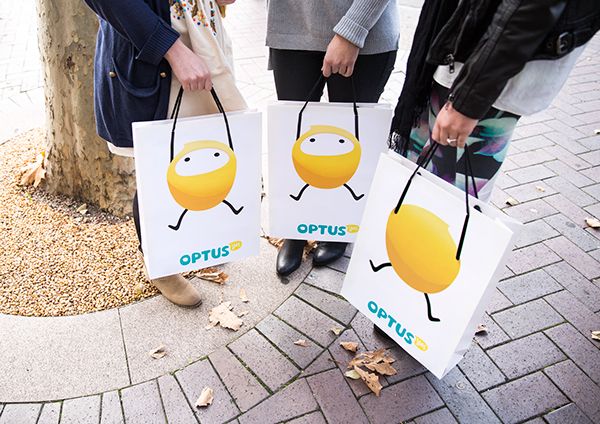
When your brand identity goes as far as your mascot on shopping bags as your customers walk out the door – I think you're doing pretty well. Optus is a cellular services provider in Australia, so you may not be familiar with their name or brand. As a result, take this as a great opportunity to explore a new brand without bias.

2. LinkedIn

Company: LinkedIn   //   Designer: LinkedIn – Internal

Click here to see LinkedIn's brand guidelines

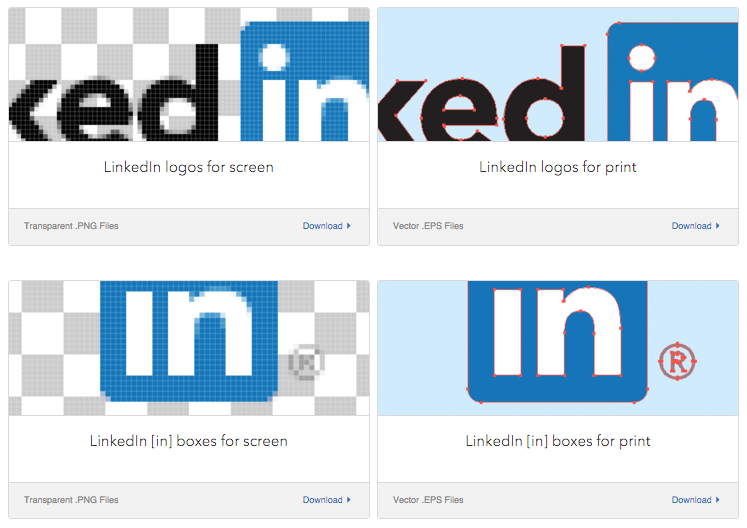
Even though LinkedIn is primarily a website and mobile app, they make sure to cover any print materials. They have one of the cleanest brand guidelines I have come across – full of resources, even downloadable print and web color pallettes to import when designing new collateral.

3. JEGS

Company: JEGS   // Agency: Origo Branding

Click here to see JEGS' brand guidelines [2]

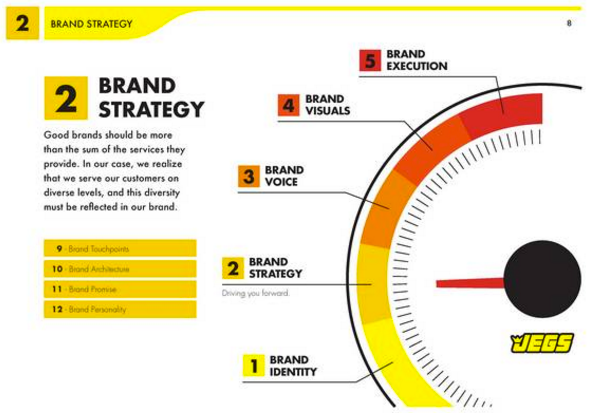
Even if you've never heard of JEGS, you can tell what industry the company is in based on the visual cues they use throughout their brand guidelines. This is a great use of industry concepts to build coherence throughout their brand guidelines.

4. Asana

Company: Asana   //   Designers: Asana – Internal & Moving Brands

Click here to see Asana's brand guidelines (ZIPs)

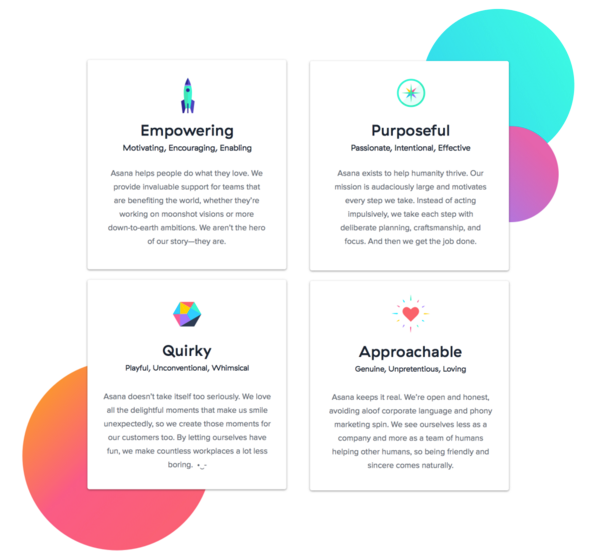
It's one thing to list a bunch of adjectives describing your brand, but it's better to help everyone understand "Why?" they describe the brand. In this example Asana also goes into the ratio and origin of where the three dots come from (hint: it's the counter of the "a" in Asana). They even wrote an in-depth Medium article about the process and symmetry of the three dots.

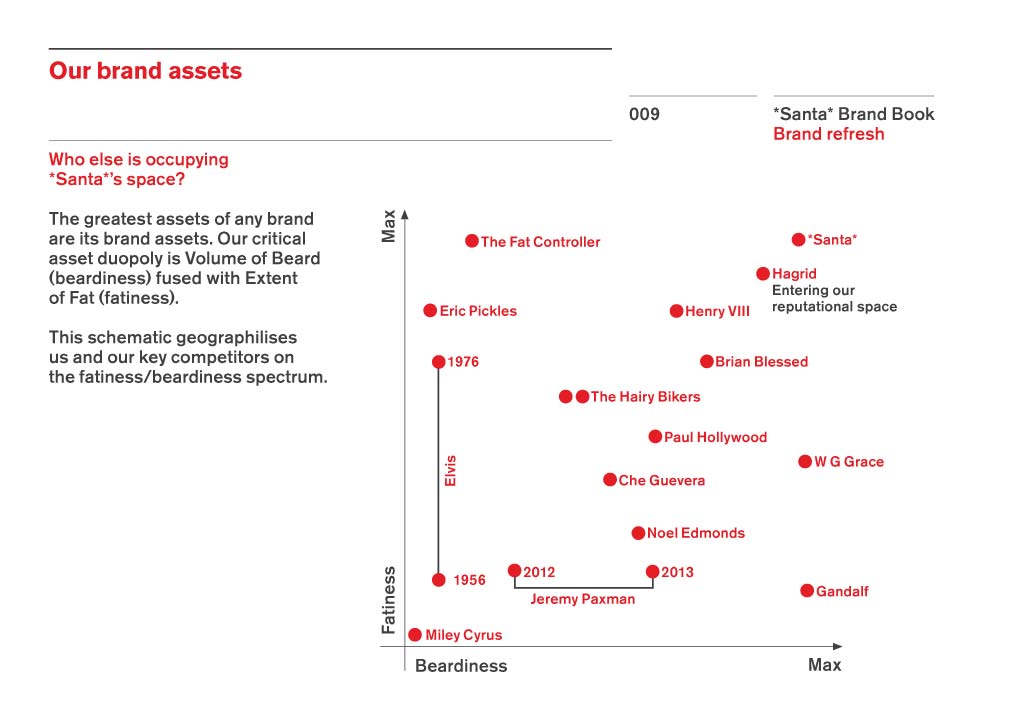
5. *Santa*

Company: *Santa*   //   Agency: Quietroom

Click here to see *Santa*'s brand guidelines

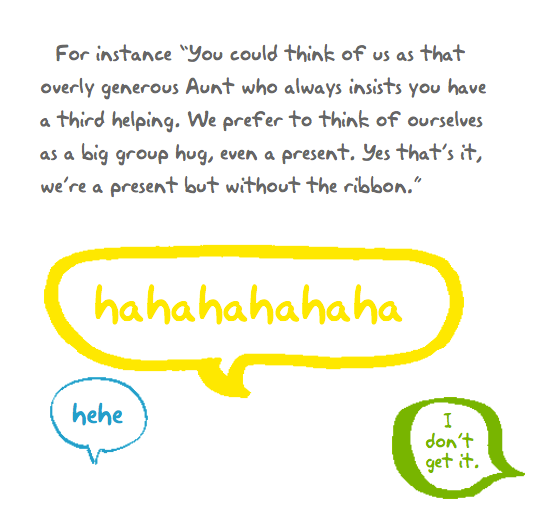
Although this is a "concept", and not an actual brand, Quietroom showed us one important thing with *Santa*: If you're a fun brand then you should show it – with everything you do. Stay light-hearted, because that's what you're known for, not just a big man stuffing himself down your chimney in the middle of the night.

Typographic Brand Guidelines

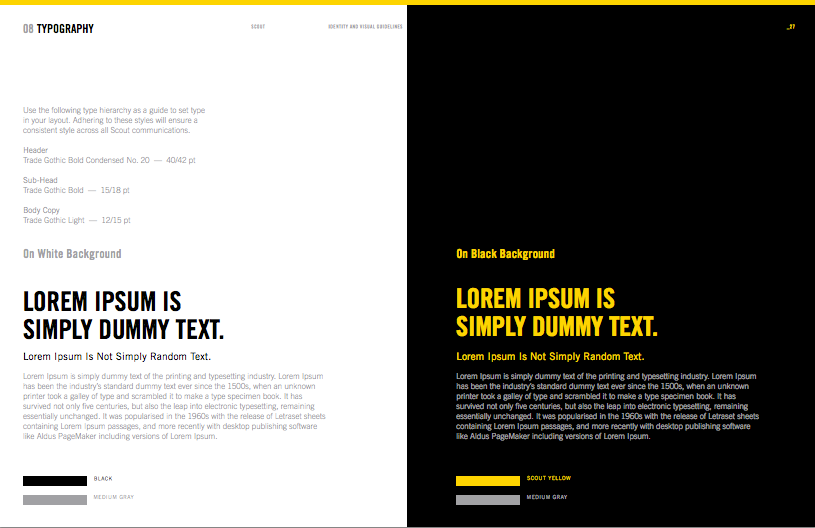
6. Scout

Company: Telenav's Scout   //   Designer: Telenav – Internal

Click here to see Scout's brand guidelines

Let's face it, your brand's text won't always appear on white backgrounds, so Scout shows us how to prepare for alternate colors. This is a very straightforward example, and honestly, it doesn't need to be more complicated than this.

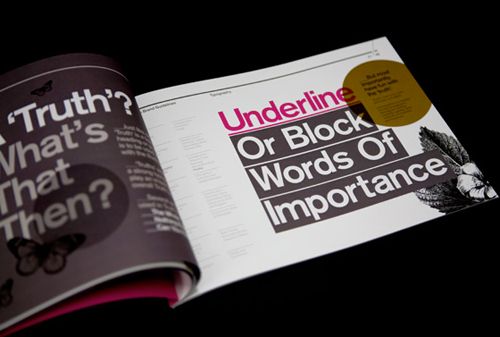
7. Truth.

Company: Truth.   //   Agency: SocioDesign

Click here to see Truth.'s brand guidelines

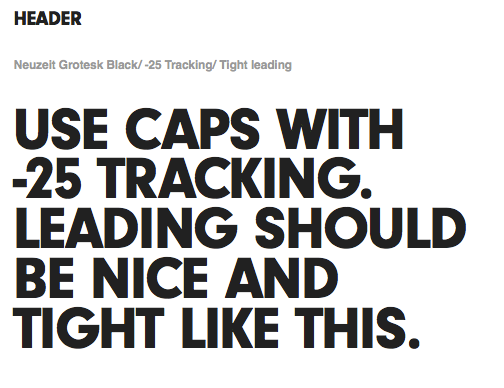
Truth., as a branding agency, shows just how good they are at what they do. Subtlety may be one of their strengths, but they went purely bold throughout all of their brand guidelines.

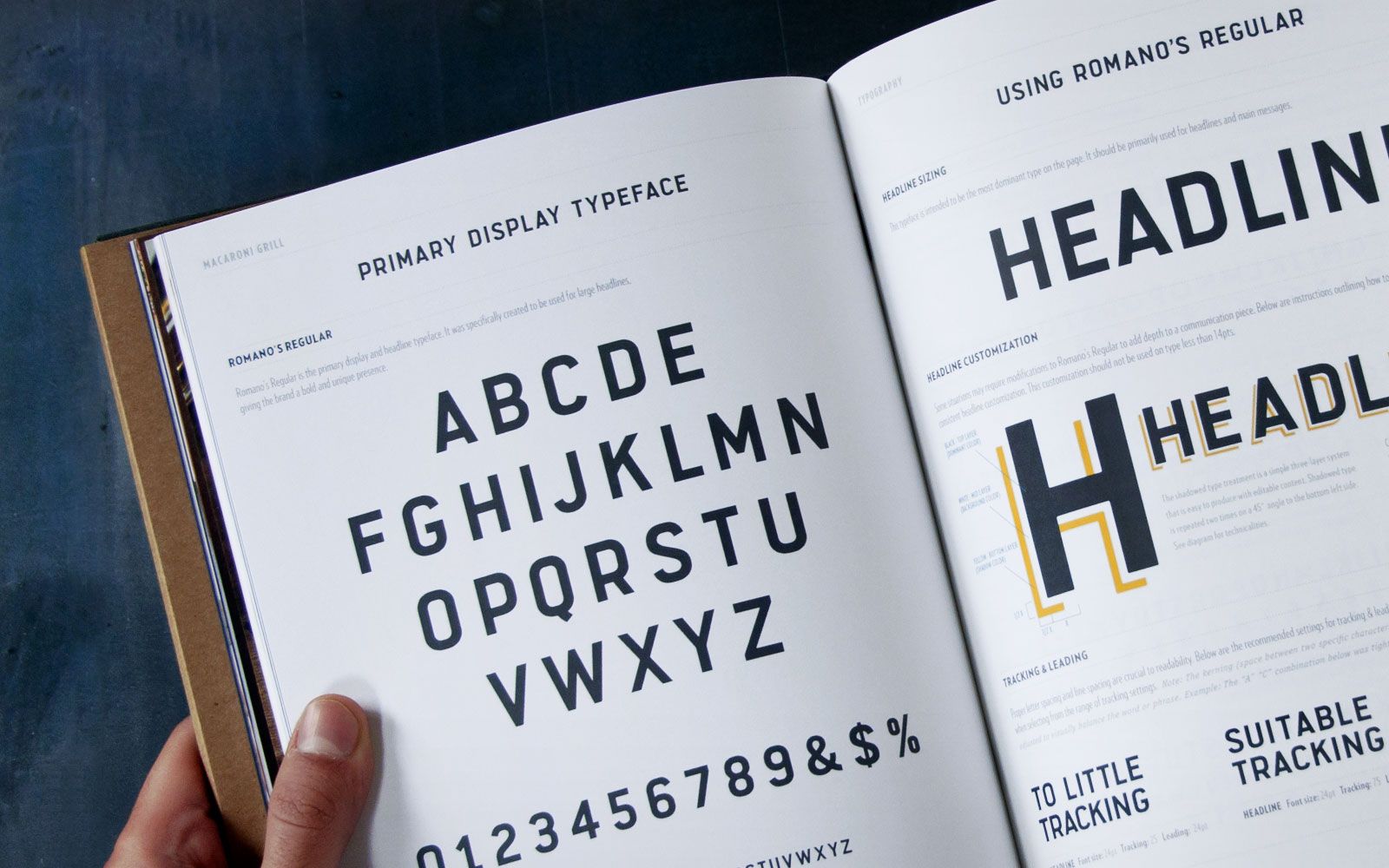
8. Macaroni Grill

Company: Macaroni Grill   //   Agency: Superbig Creative

Click here to see Macaroni Grill's brand guidelines

The way Superbig Creative laid out the brand guidelines reads like a book – it's beautiful. Creating a custom font isn't easy, it needs its own style guide, and that's just what was done for Macaroni Grill.

9. Beats by Dre

Company: Beats by Dre   // Agency: R/GA

Click here to see Beats' brand guidelines

Sometimes it's better to "hit them over the head" with simple examples.

10. KAE

Company: KAE   // Agency: SocioDesign

Click here to see KAE's brand guidelines

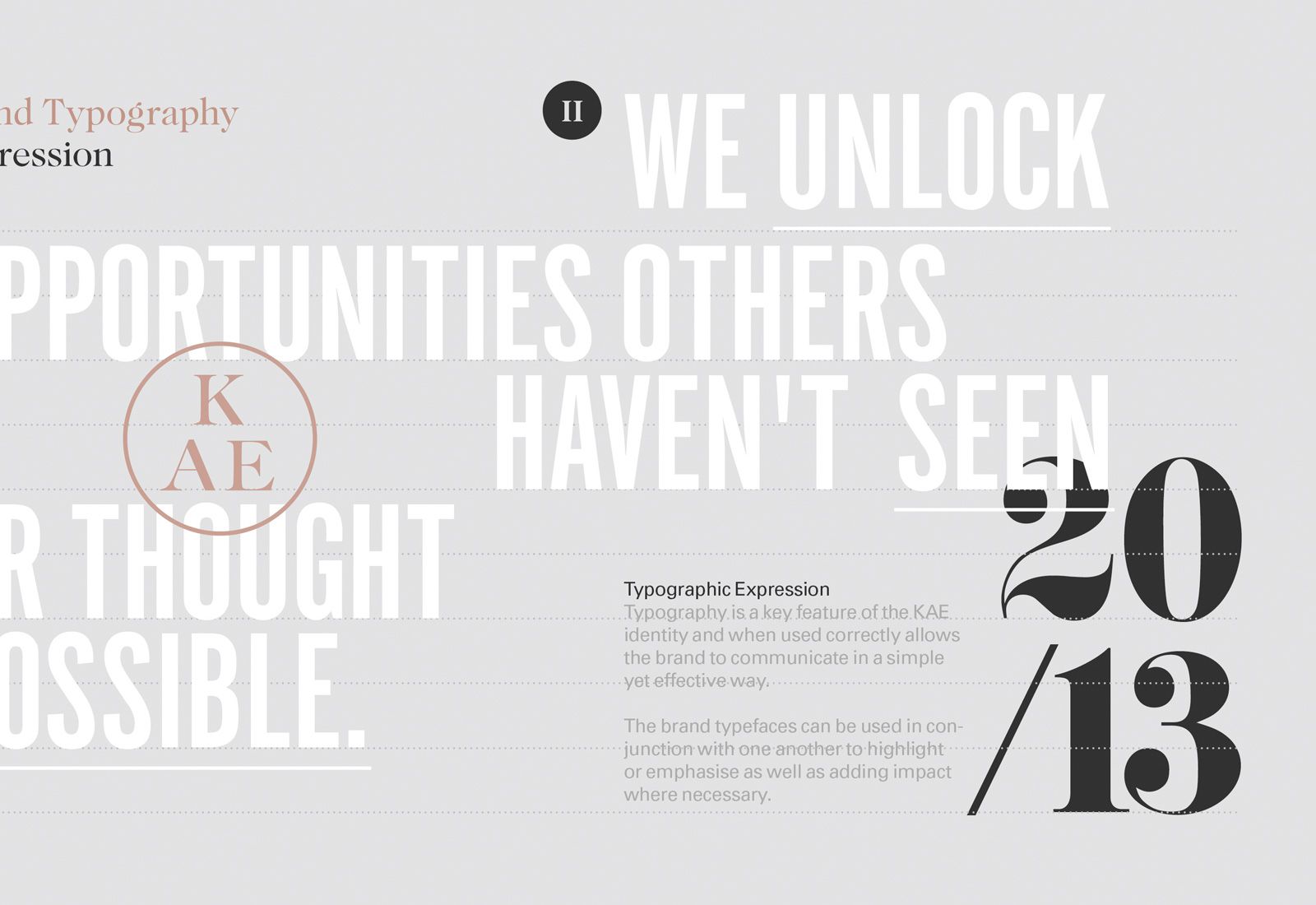
There are only 9 pages in the brand guidelines for KAE, so it's clear that typographic expression is a major identifier for the brand – big enough to take up an entire page. Also of note, SocioDesign did an excellent job creating a rich brand presence through bold serifs and copper colors via web, and foil via print.

Extensive Brand Guidelines

11. ESPN

Company:   ESPN // Agency: Dalma Design Inc.

Click here to see ESPN's brand guidelines

At 45 pages long, Dalma Design gave ESPN's brand guidelines links to each section for easier use. The easier that you can either make things to use or readable, the better it is for your users.

12. Boy Scouts of America

Company: Boy Scouts of America   //   Designer: BSA – Internal

Click here to see the BSA's brand guidelines

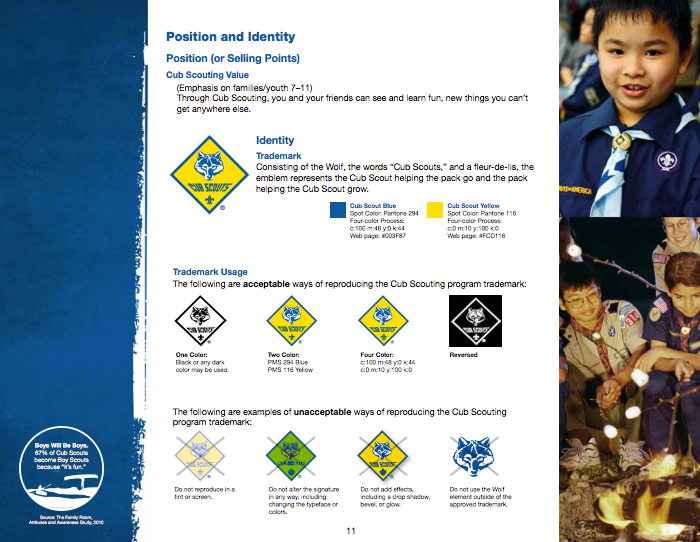
Because the nature of BSA's operating platform is based upon small community membership, funding isn't always a luxury. So, to help parents and leaders maintain the brand integrity it's important to demonstrate the appropriate usage. Overall, the brand guidelines were jam packed full of information and enjoyable to go through – as some can seem like pulling teeth.

13. Destination Canada

Company: Destination Canada   //   Agency: DDB Group Canada

Click here to see Destination Canada's brand guidelines

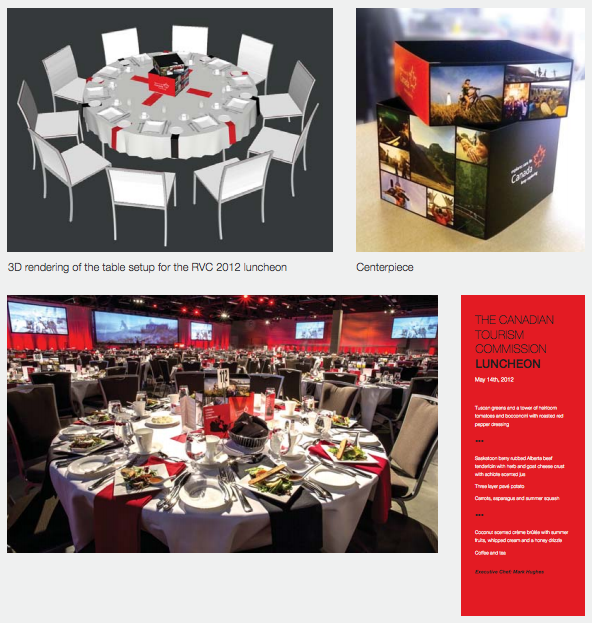
Table Design? Whoa. 104 pages later, I get it – I officially know how to market Canada.

14. Mohawk

Company: Mohawk Fine Papers   //   Agency: Pentagram

Click here to see Mohawk's brand guidelines

Mohawk and their products have become more dynamic, so why not their identity too? Pentagram did an incredible job reflecting their brand through the products. Now that Mohawk Fine Papers has adapted to the digital work with Mohawk Connects, this new brand identity literally pops off of the paper, and the screen – see what I did there?

15. Centric

Company: Centric   //   Agency: Gretel

Click here to see Centric's brand guidelines

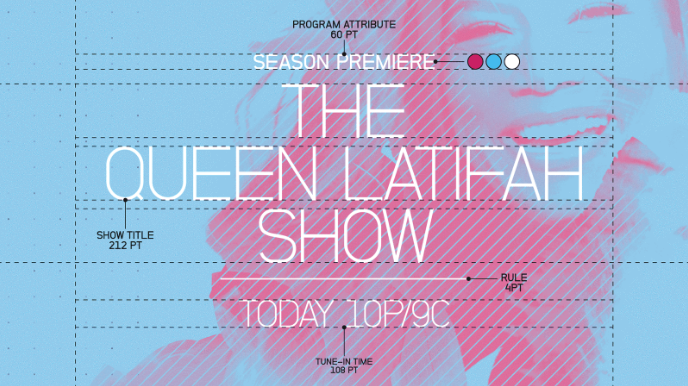
Branding a television channel is an interesting task. Gretel has some beautiful transitions mixed with textures, lines, photos and text in their case study. The use of duotones photos has become a huge trend, courtesy of companies like Spotify. If anything, you can walk away with ideas of how to control the way your UX is designed, and some simple .gifs included in your brand guidelines .pdf is a great solution.

Minimalist Brand Guidelines

16. Uber

Company: Uber   //   Designer: Uber Internal

Click here to see Uber's brand guidelines

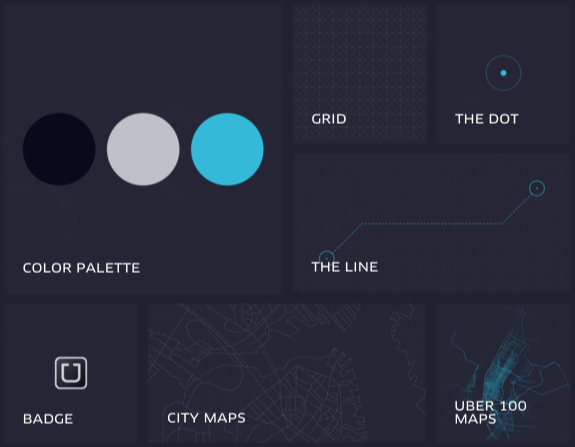
The way their branding subdomain is set up allows the user to only see what they need; rather than, having to rifle through a few dozen pages. Also, once the user clicks on the desired portion, those pages are very clean and visually legible.

17.Vanvero

Company: Vanvero   //   Agency: Brendan Lane

Click here to see Vanvero's brand guidelines

Brendan Lane trimmed all of the fat, and replaced it with beautiful imagery to reiterate what the brand does – creates digital camera accessories to allow photographers to capture incredible footage. He also laid out all of the necessary examples of logo and wordmark do's & don'ts; as well as, voice, about, color, typography and more, into just 13 pages.

18. Chempoint

Company: Chempoint   //   Agency: Hornall Anderson

Click here to see Chempoint's brand guidelines

Hornall Anderson went with a very simple black, white, and blue branding. Thus, it's very simple and translates well across all media, so there's not much hand-holding to do.

19. OntraPort

Company: OntraPort.com  // Agency: Studio-JQ

Click here to see OntraPort.com's brand guidelines

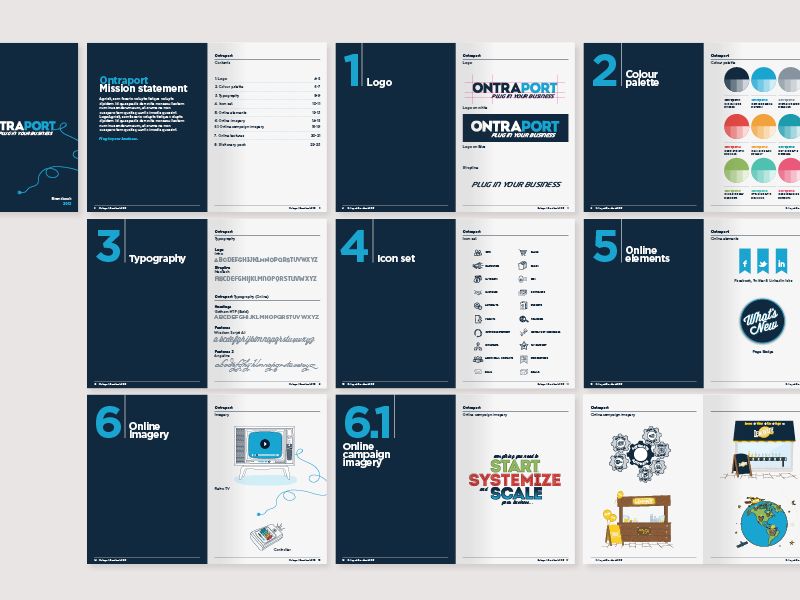
The bold use of navy page dividers and large section numbers makes and easy use of referral for the team to use internally. With large examples of company logos, typography, icons, and more, OntraPort definitely set up for success.

20. Red Cross

Company: Red Cross  //   Designer: Red Cross – Internal

Click here to see Red Cross's brand guidelines poster

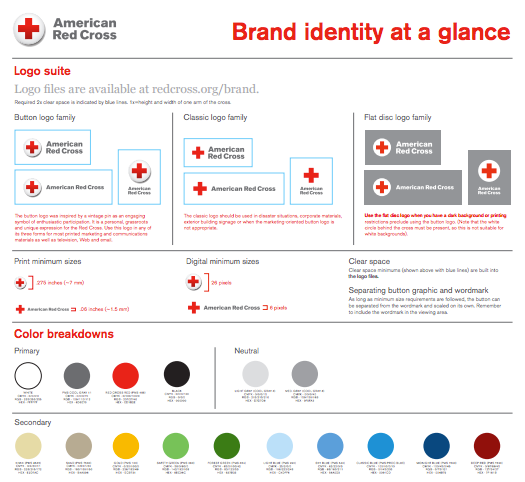
A brand "one-sheeter" is an excellent quick, desk-side reference. Even after you've made your in-depth brand guidelines, please make a one-sheeter for everyone within your company.

Voice & Tone Guidelines

21. Skype

Company: Skype   //   Designer: Skype – Internal

Click here to see Skype's brand guidelines

Giving great branded examples throughout your brand guidelines really shows "how" everyone should be presenting the brand. You may think that the basic "do's and don't" are enough, but they can still be misconstrued and used incorrectly – it just makes a sound brand presence.

22. Amazon

Company: Amazon   //   Designer: Amazon – Internal

Click here to see Amazon's brand guidelines

Using the correct voice, even layout, in advertisements is crucial. You need to make sure you're saying "the right thing." Using a CTA depends on the product and where you're advertising, and Amazon went as far as giving examples of both on-site and off-site ads in the brand guidelines.

23. Fandango

Company: Fandango   //   Agency: Gelcomm

Click here to see Fandango's brand guidelines

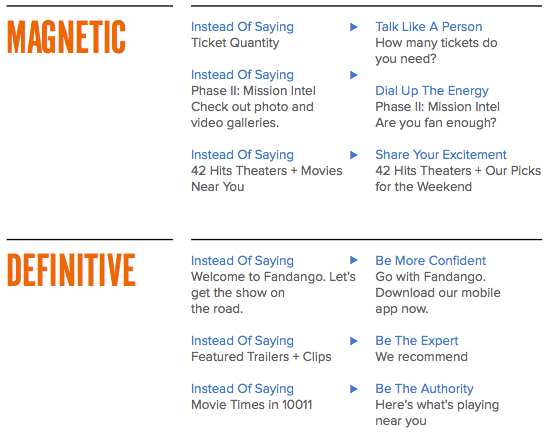
Break it down. Fandango has 4 main branded words their using, and next to each word the present get examples of just what they mean, and how to use them. This is a great example of speaking to those reading your brand guidelines like a human. Kudos.

24. DFW Airport

Company: DFW Airport  //   Agency: Interbrand

Click here to see DFW's brand guidelines

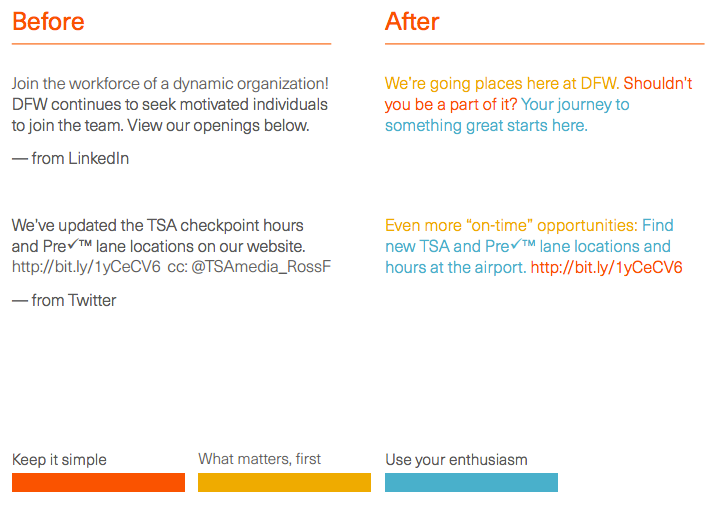
I was traveling through DFW Airport when the new branding launched. So, I can't help but feel like I had something to do with it – but, in reality, when I read the article about the new branding I had to give them a nod. They clearly went through and extensive process to lay their ground rules: so much so, that they color-coded their voice guidelines. That's a technique I hadn't seen before. Who knew color-coding could be innovative?

25. IT Job Board (now Dice)

Company: IT Job Board (now Dice)   //   Agency: Ragged Edge

Click here to see IT Job Board's brand guidelines

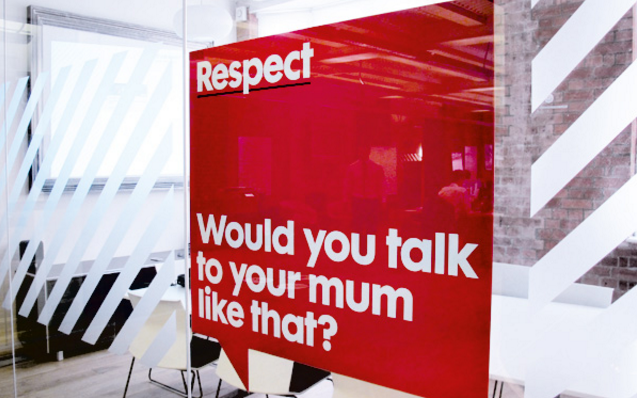
Taking the step to further promote your brand voice with reminders around the office is a great cue to take from IT Job Board (now known as Dice).

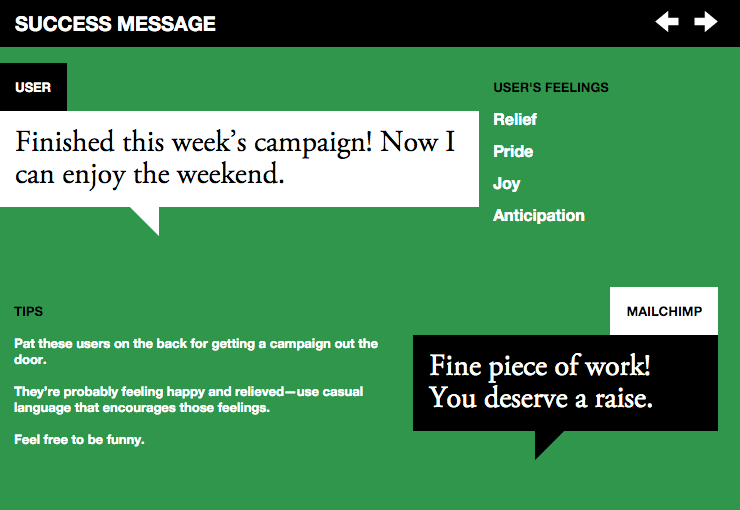
26. MailChimp – Voice & Tone Guide

Company: MailChimp   // Designer: MailChimp – Internal

Click here to see MailChimp's voice & tone brand guidelines

MailChimp is a great SaaS email platform that makes email marketing way easier (it's our go-to tool). So, it only makes sense that their voice and tone would be supportive and uplifting. There's nothing like getting a big ol' slap on the back from your software.

Grid-Based Brand Guidelines

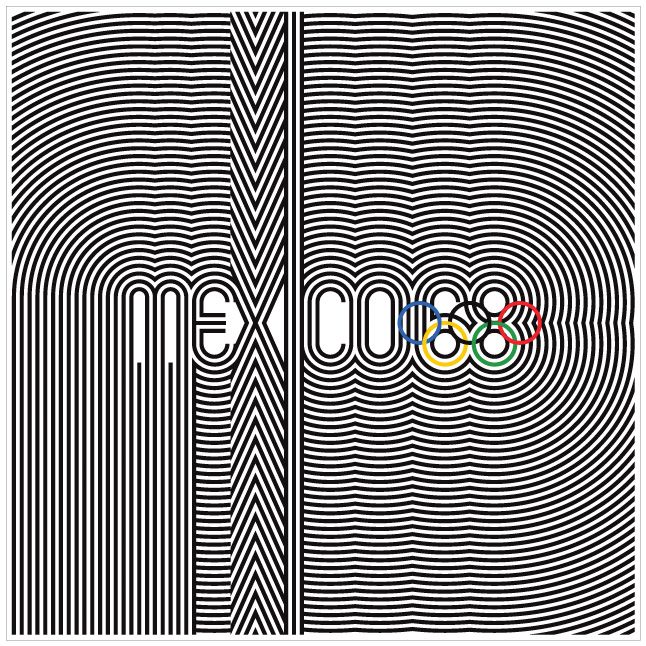
27. 1968 Mexico City Olympics

Company: 1968 Mexico City Olympics  //   Designer: Lance Wyman

Click here to see the 1968 Mexico City Olympics brand guidelines

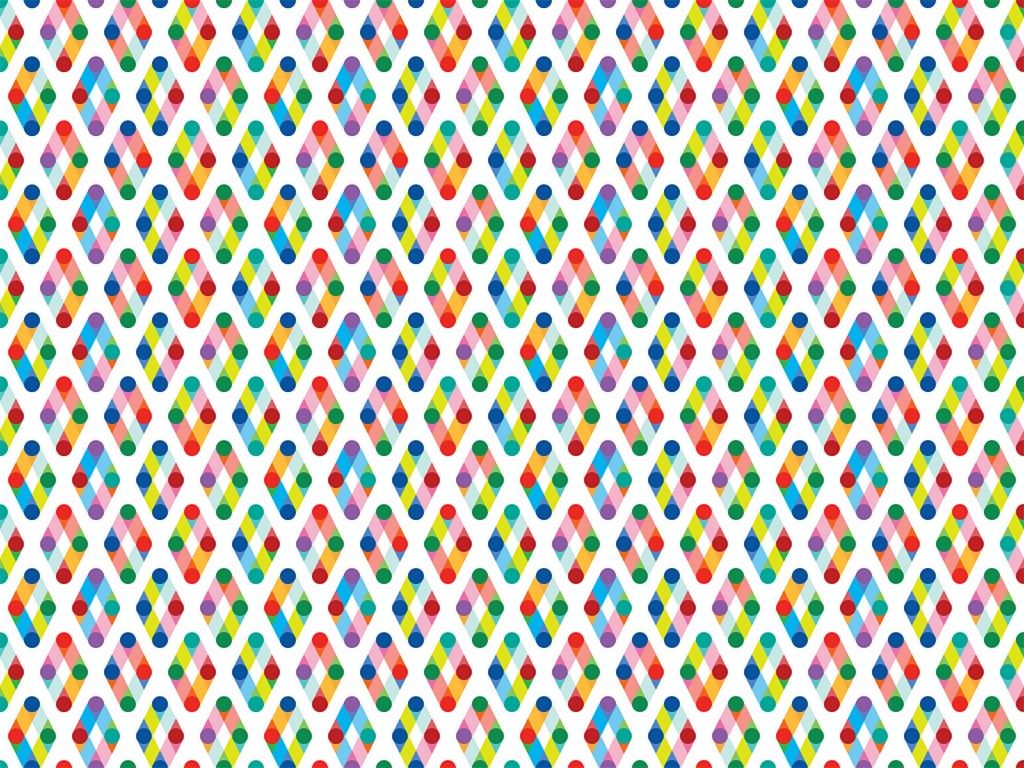
You cannot create and identity like this without a grid. Although this event may be known for something else, this branding identity won't soon be forgotten, because of the bold brand identity of the Olympics. It's remarkable how the design team was able to transfer the heavy line design throughout the Olympics, from the stadium design to apparel design.

28. Demand Media

Company: Demand Media   //   Agency: Manual Creative

Click here to see Demand Media's brand guidelines

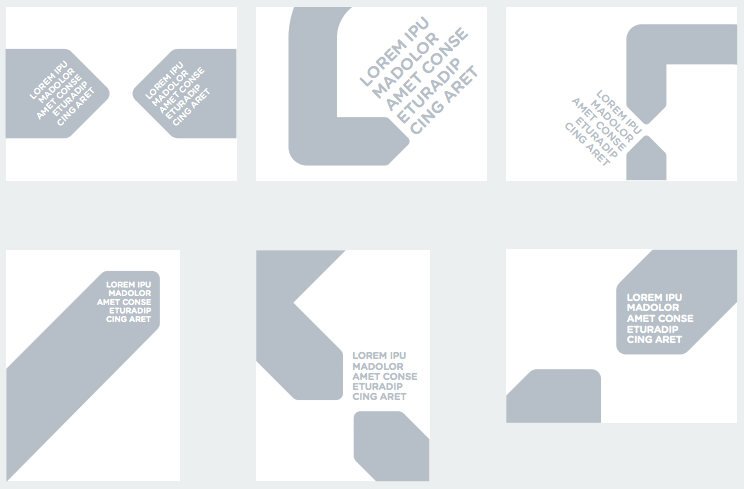
Manual Creative found a great way to repurpose Demand Media's logo to break up their print and web formatting. Rather than shrinking and dissecting their logo, they blew it up to create unique negative space that would be hard to conceive otherwise.

29. Gandour

Company: Gandour   //   Agency: SocioDesign

Click here to see Gandour's brand guidelines

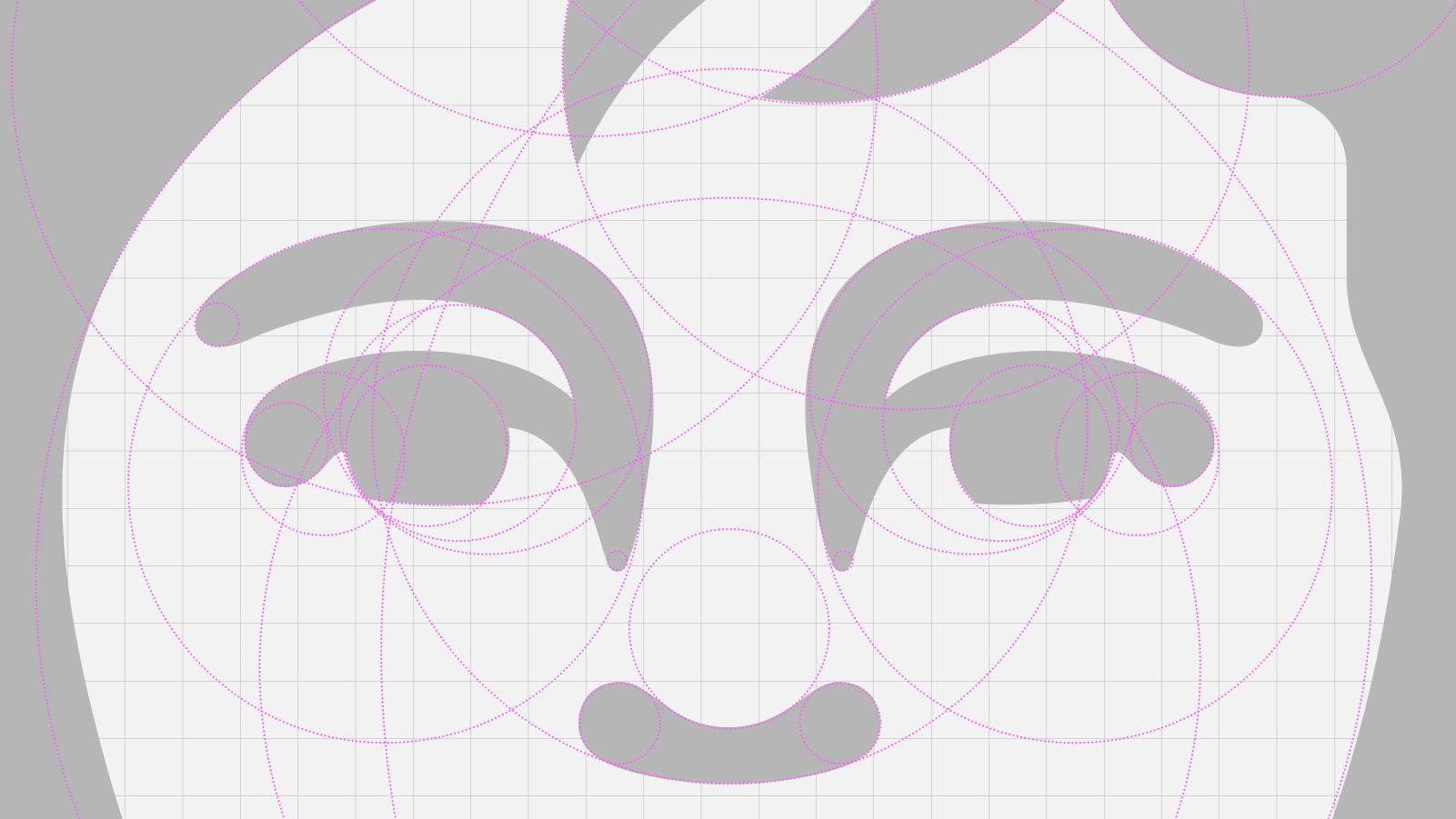
Now this grid is a bit extensive, but you can see why the designer went as far as they did for the sake of symmetry. Upon further review of their website, I don't see this particular logo being use, nor the grid – but it would be incredible to see what they could come up with from the grid.

30. TBS

Company: TBS   //   Agency: Sean Heisler

Click here to see TBS's brand guidelines

Oh, the simplicity. Thank you – thank you. If you click on Sean's link, you will see the versatility of the logo through the images and colors he applies. Sort of a has a mid-80's MTV feel, fast-forward to today.

31. District Circle

Company: District Circle   // Agency: BASIC

Click here to see District Circle's brand guidelines

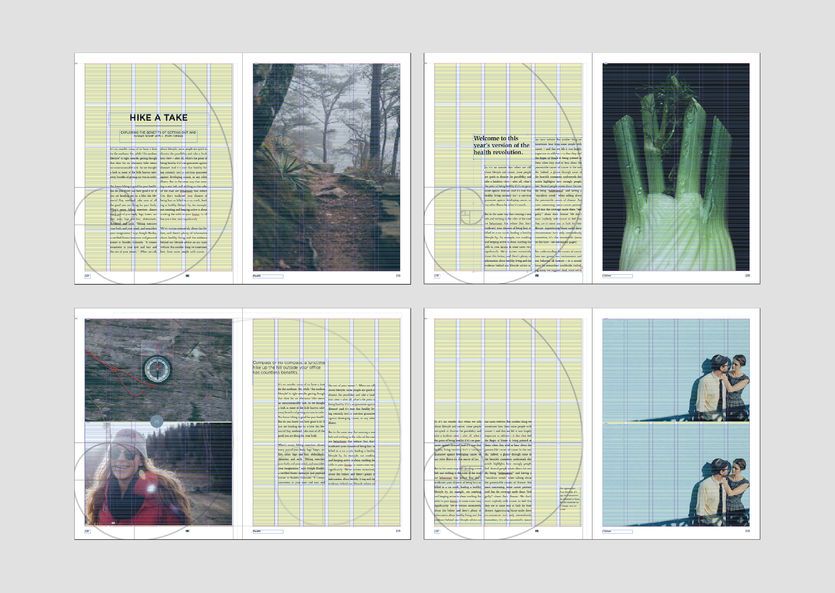
The Golden Ratio, and copy guidelines – BASIC built a great unit of measurement for District Circle to follow. Including the Golden Ratio is something I wouldn't have thought about, but it's clear (especially in the lower left layout) how much of a difference it can make.

Inspirational Brand Guidelines

32. Inter Miami FC

Company:   Proposed Inter Miami FC // Designer: Diego Guevara

Click here to see the Conceptual Inter Miami FC's brand guidelines

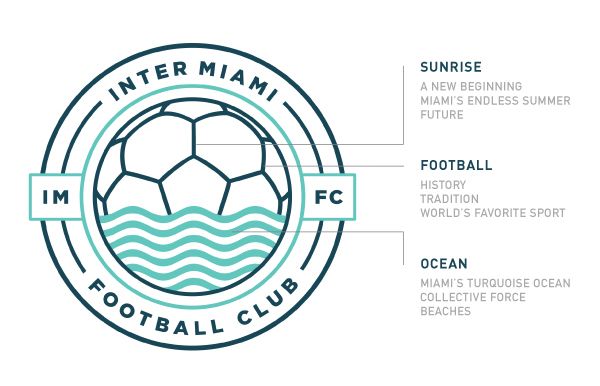
This a fictional brand, created by a fan in hopes of a new MLS soccer team coming to Miami. He went through a very thorough branding process just to show how well the city of Miami could be represented by a new addition. These brand guidelines really get the point across by explaining the meaning behind every shape and line – that's a step often overlooked in many brand guidelines.

33. Kansas State University

Company: Kansas State University   //   Designer: K-State – Internal

Click here to see Kansas State University's brand guidelines

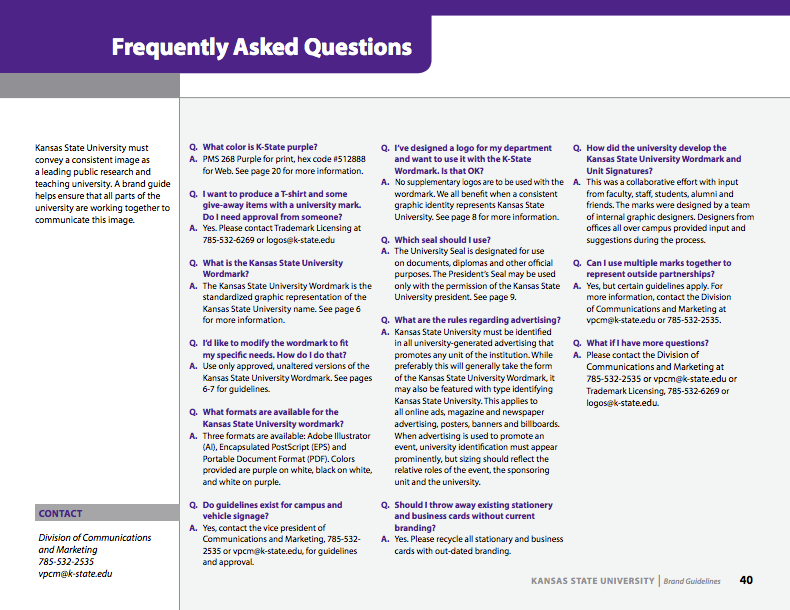
You may think you have hit all of the nails on the head, but remember how many swings it took to do so. People will have questions, they always do. One way to speak to that is to include a great Q&A at the end with internal contact information.

34. Calgary Chamber of Commerce

Company: Calgary Chamber of Commerce   //   Artist: Iancu Barbarasa

Click here to see the Calgary Chamber of Commerce's brand guidelines

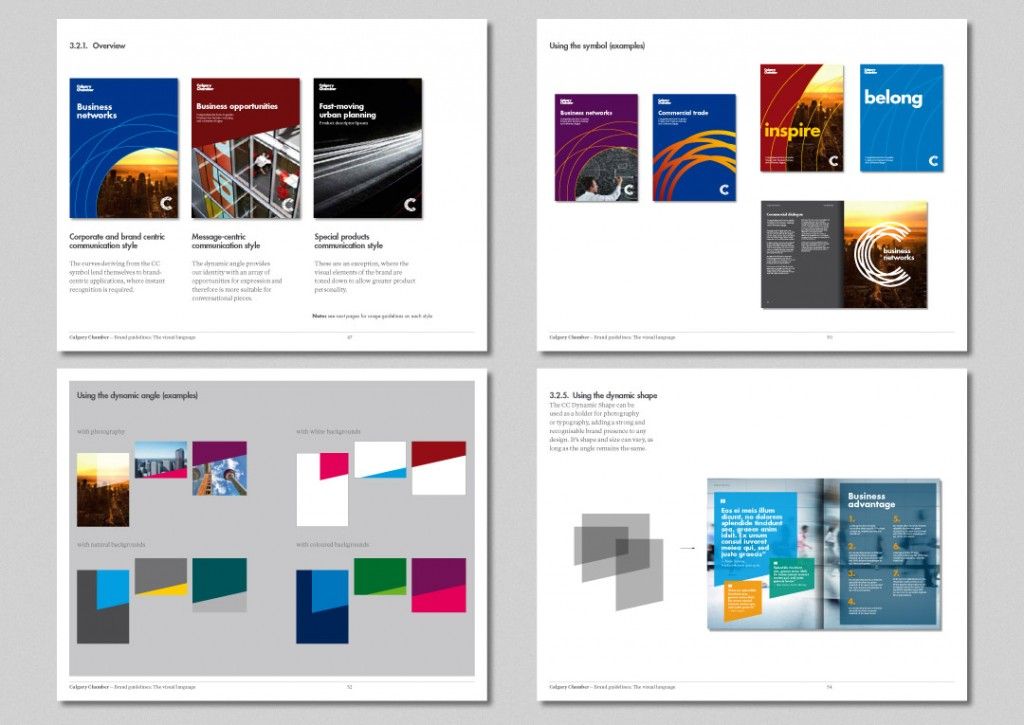
Using branded elements to carry throughout all of your brand collateral reiterates brand stability. These are very forward-thinking, financial-based brand guidelines that many conservative companies can use as a jumping-off-point.

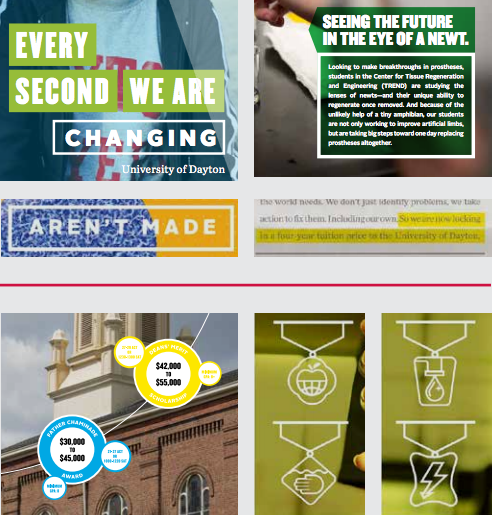
35. University of Dayton

Company:  University of Dayton    //   Designer: University of Dayton – Internal

Click here to see University of Dayton's brand guidelines

Even though the University of Dayton has incredibly conservative brand standards, they managed to find a coherent way to market themselves in a way that is relatable to their market: all while maintaining their brand integrity. By the way, their institutional brand guidelines are 46 pages long, and it doesn't even include their athletic marks – impressive.

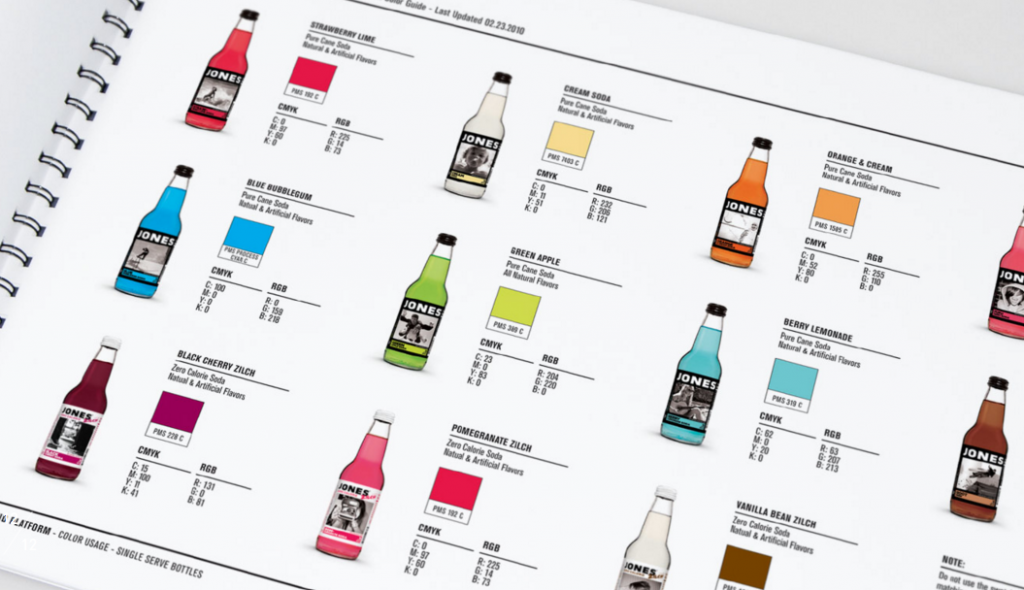
36. Jones Soda Co.

Company: Jones Soda Co.   //   Agency: Superbig Creative

Click here to see Jones Soda Co's brand guidelines

Identifying your products as specific brand colors is another great cohesive branding style. In Jones Soda's case, they are using this as a guide to show the three primary color IDs (Pantone, CMYK, and RGB) to help maintain the branding across all of their brand mediums. Companies often separate their products from their brand guidelines, but Superbig Creative found a seamless way to combine everything into one.

My goal with this article was to show you a collection of some brands that are doing it right.

These are just a few of the many brand guidelines that I found interesting available on the internet. Please feel free to follow the links I have provided to the either the companies or agencies to see some other amazing projects.

If you're just getting started with your brand guidelines, take a look at my last article, How To Produce Your First Brand Style Guide. When you're ready to expand beyond that, Graham "Logo" Smith provides us with a free 14-Page Brand Identity Guidelines Template to get you started. Just add a few pages to talk about your voice, show some examples of brand usage, and add a Q&A at the end.

Do you know of a great brand guidelines document out there that we missed? Maybe one that you worked on?

Leave a note in the comments for others to check it out!

Brand Mark Guidelines Template

Source: https://www.contentharmony.com/blog/great-brand-guidelines/

Share:
banner